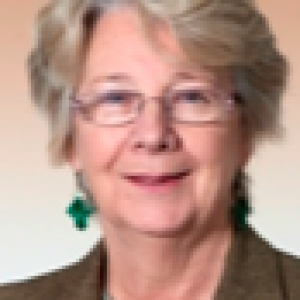

Dr. Katrina Lane-Krebs
Bachelor Health Science, PhD., Master Letters, Grad. Certificate Tertiary Education, Grad. Certificate in Correctional Practice, Certificate Education (Early Childhood), Registered Nurse, Workplace Assessor and Trainer, TESOL, JP (Qualified)
Senior Lecturer - SNMSS
School of Nursing, Midwifery and Social Sciences
- k.lane-krebs@cqu.edu.au
- ORCID: 0000-0001-7649-8931
- (07) 3023 4268
-
Bundaberg
University Drive Building 3 - G0.53
BUNDABERG 4670
About Me
My teaching philosophy is grounded in the belief that education is transformative, relational, and central to developing capable, reflective, and socially responsive health professionals. As a nursing academic and educational leader, I view teaching as extending beyond the transmission of knowledge to the creation of inclusive, psychologically safe, and intellectually engaging learning environments that foster critical thinking, professional identity formation, and lifelong learning.
My approach to teaching is strongly influenced by reflective practice, relational leadership, and student-centred pedagogy. I believe effective learning occurs when students are supported to actively engage with knowledge, connect theory with lived and clinical experience, and develop the confidence to contribute meaningfully to healthcare, leadership, and their communities. Within nursing and health education, this includes fostering culturally safe, inclusive, and evidence-informed learning experiences that recognise the diverse backgrounds and circumstances students bring to higher education.
I am particularly interested in curriculum leadership, large-cohort engagement, and the use of innovative and technology-enhanced pedagogies to support accessibility, participation, and authentic learning. Through reflective activities, collaborative learning, case-based discussions, and applied scholarship, I aim to strengthen students’ critical thinking, professional communication, and capacity for reflective clinical practice.
Teaching, mentorship, and leadership are intrinsically connected. I believe educators play a significant role in modelling professionalism, compassion, curiosity, and scholarly engagement while supporting students and emerging academics in developing confidence, resilience, and leadership capability. Increasingly, my educational practice focuses on creating multiplier effects through mentorship, academic support, and sustainable learning cultures that empower others to lead, contribute, and support future generations of learners.
My teaching philosophy aligns with the principle that impactful education should strengthen individuals, professions, healthcare systems, and communities through reflective, inclusive, and transformative learning experiences.
General
Background
Dr Katrina Lane-Krebs is a Registered Nurse, academic leader, and researcher with extensive experience across nursing practice, higher education, workforce capability development, and psychosocial wellbeing scholarship. With over 20 years of clinical nursing experience and a substantial academic leadership portfolio within regional Australian higher education, her work integrates teaching, research, mentorship, and community engagement to support inclusive, reflective, and culturally safe healthcare practice. Her academic and research interests focus on psychosocial well-being, reflective practice, workforce sustainability, vulnerable populations, and translational health scholarship, with a growing emphasis on higher-degree supervision, collaborative publication, research culture development, and mentorship of emerging researchers and clinicians transitioning into scholarly and leadership roles.
Her work has gained increasing international recognition through conference dissemination, interdisciplinary collaboration, higher degree examination, and engagement with global health and education scholarship. She is particularly interested in advancing higher and tertiary education in developing, and resource-constrained contexts, with a focus on workforce capability, inclusive education, culturally responsive pedagogy, and sustainable academic capacity building. Through mentorship, collaborative scholarship, and translational educational leadership, her work aims to strengthen nursing and health education systems while supporting the development of future healthcare professionals, educators, and research leaders across diverse international settings.
Awards
2026 Excellence in Research Award (multiple nominee)
2025 Australia Day Citizen of the Year (Regional) Finalist
2025 VC Excellence Award Nominee
2025 VC Values Award Nominee
2025 Venus International Foundation Women's Research Award Invitational Nominee
2024 Australia Day Citizen of the Year (Regional) Finalist
2024 VC Excellence Award Nominee
2024 VC Values Award Nominee
2024 Venus International Foundation Women's Research Award Invitational Nominee and Recipient
2023 VC Excellence Award Recipient
2023 VC Excellence Awards Nominee
2022 VC Excellence Awards Nominee
2022 VC Values Award Nominee
2021 VC Excellence Awards Nominee
2012 National Award for Teaching Excellence (Nominee)
2010 Pride of Australia Medal - Inspiration in Education (semi-finalist)
Member of the Golden Key International Honours Society
Professional Experience
Teaching and Learning interests:
Strategic leadership in nursing and health professions education across undergraduate, postgraduate, regional, and distance-learning contexts
Curriculum leadership and educational innovation within rehabilitation, paediatric haematology and oncology, forensic and correctional nursing, and complex care education
Leadership in scalable, technology-enhanced, and inclusive learning design to support student engagement, accessibility, and participation across large and diverse cohorts
Resource and assessment development of authentic, reflective, and simulation-based learning environments, including low- and high-fidelity simulation, to strengthen clinical reasoning, professional identity formation, and workforce readiness
Educational leadership in reflective practice, psychosocial wellbeing, culturally safe healthcare education, and student-centred pedagogical approaches
Advancement of evidence-informed teaching, curriculum renewal, and assessment innovation aligned with contemporary healthcare workforce and higher education priorities
Leadership in mentorship, academic capability development, and the support of clinicians and emerging academics transitioning into higher education and scholarly practice
Interdisciplinary and translational integrative approaches to healthcare education that connect theory, practice, lived experience, and community-informed learning
Creation of sustainable teaching and learning cultures through collaborative scholarship, educational leadership, and academic succession planning
Shaping inclusive and transformative environments in higher education environments that strengthen healthcare professionals, systems, and communities
Professional Memberships
Australian Primary Care Nurses Association
Pain Nurses Australia
Australian and New Zealand Mental Health Association
CATSINaM Congress of Aboriginal and Torres Strait Islander Nurses and Midwives
International Association of Forensic Nurses
Australian Society of Authors- Full Member
Responsibilities
Current service roles:
Reconciliation Action Plan Champion (RAP)
Campus Coordinator (Bundaberg SNMSS)
Campus Leadership Committee (Bundaberg)
ALLY Campus Contact
Previous leadership roles:
Head of College, SNMSS Acting
Head of Course (PG Correctional Nursing)
Head of Course (UG SNMSS) Acting
DDLT (Acting)
Assistant to the Dean for Simulation
Champion for Technology & Inclusion in Online Education
Champion for Online Education Delivery (MOC)
Professional Interests
My professional interests sit at the intersection of psychosocial wellbeing, inclusive practice, disability, trauma-informed care, and person-centred health education. Across my research, teaching, and leadership activities, I have maintained a sustained commitment to improving outcomes for people living with disability, children and families experiencing complex care needs, and communities affected by trauma, loss, displacement, and social disadvantage.
A core strand of my work focuses on paediatric rehabilitation, particularly neurodevelopment, family-centred rehabilitation, and therapeutic approaches that support participation, wellbeing, and quality of life. This includes interest in hydrotherapy, play-based rehabilitation, and complementary interventions such as music, movement, dance, and creative modalities. These interests are underpinned by a broader commitment to understanding how families build resilience, maintain connection, and reconstruct meaning in the context of disability, chronic stress, trauma, and grief.
My Master’s thesis, Dancing in the Spotlight: A Creative Writing Approach Depicting the Lived Experience of Parenting a Child with Special Needs, explored narrative and creative writing as a means of representing lived experience, with particular attention to the psychosocial impacts of chronic stress, caregiving, and post-traumatic stress. This work informed my ongoing interest in narrative, reflective, and creative approaches as mechanisms for recovery, meaning-making, and professional learning.
My doctoral research, The Bricoleur: Re-choreographing Lives, Rewriting the Master Script: The Phenomenon of Mothering as Described by Mothers of Children Living with Spastic Cerebral Palsy, further developed this focus by exploring trauma-informed recovery, maternal identity, empowerment, and the lived experience of mothering children with complex neurodevelopmental needs. This work continues to inform my scholarship in psychosocial wellbeing, inclusive health practice, disability-informed education, and human-centred approaches to care.
More broadly, I am active in advancing inclusive and culturally responsive practice for people living with disability, First Nations peoples, culturally and linguistically diverse communities, and those experiencing structural barriers to health, education, and participation. My current professional interests extend to accessible higher education, reflective practice, trauma-informed pedagogy, aged care, psychosocial wellbeing, and the preparation of health professionals who are equipped to practise with compassion, cultural safety, and social accountability.
Key Achievements
My key achievements include sustained leadership across nursing education, curriculum renewal, inclusive practice, and psychosocial well-being scholarship. I have contributed to the development and delivery of large-scale undergraduate nursing units, postgraduate correctional nursing programs, and evidence-informed curriculum initiatives that support student engagement, professional capability, and practice readiness. My academic leadership includes roles in course coordination, campus coordination, research cluster development, mentorship of emerging academics, and contributions to community and university engagement activities.
I have also advanced national scholarly and curriculum resources, including authorship in Fundamentals of Nursing (Disability chapter); Health Psychology in Australia; and Health and Human Behaviour. These contributions reflect my sustained engagement with health education, psychosocial wellbeing, disability, person-centred care, and the preparation of future health professionals within an Australian context. In addition, my scholarly profile includes peer-reviewed publications, conference presentations, journal reviewing, thesis examination, and contributions to national conversations in nursing, disability, pain education, and inclusive practice.
A further achievement is the demonstrated policy and practice relevance of my recent research into complex pain, particularly in strengthening understandings of pain assessment, pain education, and person-centred responses to persistent and complex pain experiences. This work has contributed to broader professional conversations in pain management education, including its inclusion within the Australian Standards for Pain Management Education, reflecting its relevance to contemporary health workforce capability and safe clinical practice. My expertise in disability, complex care, and psychosocial well-being has also informed invited commentary on National Disability Insurance Scheme Reform, particularly regarding the needs of people living with disability, families, carers, and regional communities. Together, these contributions demonstrate research impact beyond publication, extending into standards development, sector consultation, professional education, and policy-informed advocacy.
Research Interests
Education Systems - Higher Education
Other health sciences - Other health sciences not elsewhere classified
Other human society - Other human society not elsewhere classified
Applied Mathematics - Applied Mathematics not elsewhere classified
Statistical and algorithmic application within Health and Medical Sciences
Other psychology - Other psychology not elsewhere classified